Checking your moles & why you should do it now

2 min read
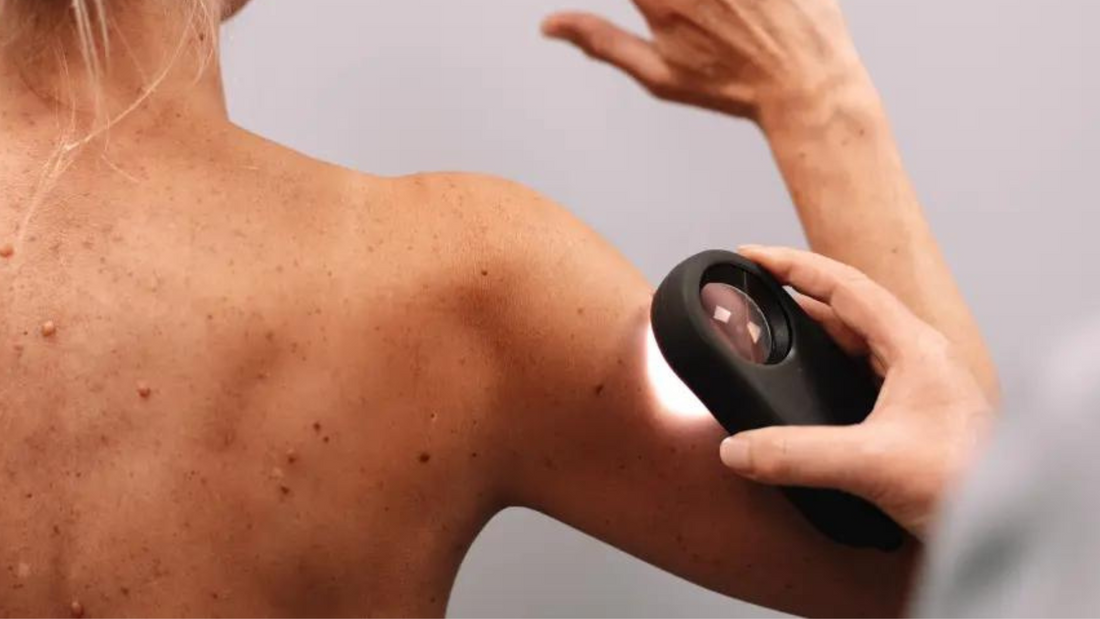
Solbari blog: checking your moles & why you should do it now

Medical professionals recommend that you get to know your own skin and check your skin regularly. If you notice that something is changing, or it appears to be a different colour, starts to bleed and doesn't heal properly, you should go and see your GP or dermatologist as soon as possible.

For the untrained eye, a melanoma or skin cancer can be very difficult and sometimes impossible to spot. This is the reason why you should also visit your GP or dermatologist once a year for a skin check.

Early detection of skin cancers is very important, especially for melanoma, as the survival rate is much greater when caught early. Research shows that it can sometimes be as little as a matter of months between when melanoma is first detected to the point where it metastasises and becomes a lot more difficult to treat.

More than 11,500 Australians are diagnosed with melanoma each year and 434,000 with non-melanoma skin cancers. 2,000 of them will die annually, more than killed in road accidents. The real tragedy is that these skin cancer deaths are preventable in most cases.

Dr. Craig Sinclair "wants to reinforce the importance of prevention. It makes the world of difference if you can detect skin cancer early."

He continues by saying "My best advice is to continue to choose sun protection whenever there is an ultraviolet (UV) index greater than 3."

"But once again, just because it's getting cooler, doesn't mean you through sun protection out the window. Don't be fooled by temperature, it's not related to UV." Dr. Sinclair is Chair of the Skin Cancer Committee for Cancer Council Australia.

The ABCDE has been created to help you define what to look out for:

Solbari the ABCDE of skin check

You can find out more about Solbari's certified UPF50+ sun protective range by clicking the links below:

Women UPF 50+
Men UPF 50+
Sun Hats UPF 50+
Accessories UPF50+
Skin Check App

Back to blog homepage

Content Disclaimer: All content on the Solbari website is for informational purposes only. It does not constitute and is not intended to be a substitute for professional medical advice, diagnosis or treatment. Never disregard professional medical advice or delay seeking it because of something you have read on this website. Reliance on any information provided on this website is solely at your own risk. Always seek the guidance of your doctor or other qualified health professional with any questions about your health or a medical condition.

More articles

Leah wears a Solbari visor and t-shirt

Your Story Series: Leah

Skin Cancer & Melanoma
2 min read

8 years ago, Leah was diagnosed with Stage 3 melanoma shortly after her son's first birthday. In the years since she has learned the tools to allow her to continue enjoying the outdoors.

Courtney wears a Solbari sun hat and Luxe Sun Wrap

Your Story Series: Courtney

Skin Cancer & Melanoma
3 min read

After seeking help for a spot that was changing colour and getting bigger, Courtney was diagnosed with melanoma. She has since prioritised her health above everything else, and has incorporated sun protection as a non-negotiable in her daily routine. 

How UPF 50+ Sun Protection Can Help Alleviate Rosacea

How UPF 50+ Sun Protection Can Help Alleviate Rosacea

Skin Cancer & Melanoma
2 min read

Does overexposure to UV rays affect Rosacea? How can UPF 50+ sun protective clothing help to alleviate this skin condition? Find out more.

Courtney Mangan wears Solbari UPF 50+ products

Your Story Series: Courtney Mangan

Skin Cancer & Melanoma
2 min read

After four melanoma diagnoses, Courtney Mangan's journey to nearly five years cancer-free reflects extraordinary resilience and a renewed commitment to lifelong sun safety.

A doctor conducts a skin check

Year-Round Skin Health Tips

Skin Health Education
3 min read

Maintain healthy skin all year round with daily sun protection, monthly self exams, and annual dermatologist skin checks. Learn how simple habits can reduce skin cancer risk, support early detection, and keep your skin protected for the long term.

Your Story: Eadie

Your Story Series: Eadie

Skin Cancer & Melanoma
2 min read

At just 22, Eadie was diagnosed with a Basal Cell Carcinoma. Today, she shares how her relationship with the sun, and sun protection, has changed.