What to look out for: harmless mole or potential skin cancer?

3 min read
What to look out for: harmless mole or potential skin cancer?
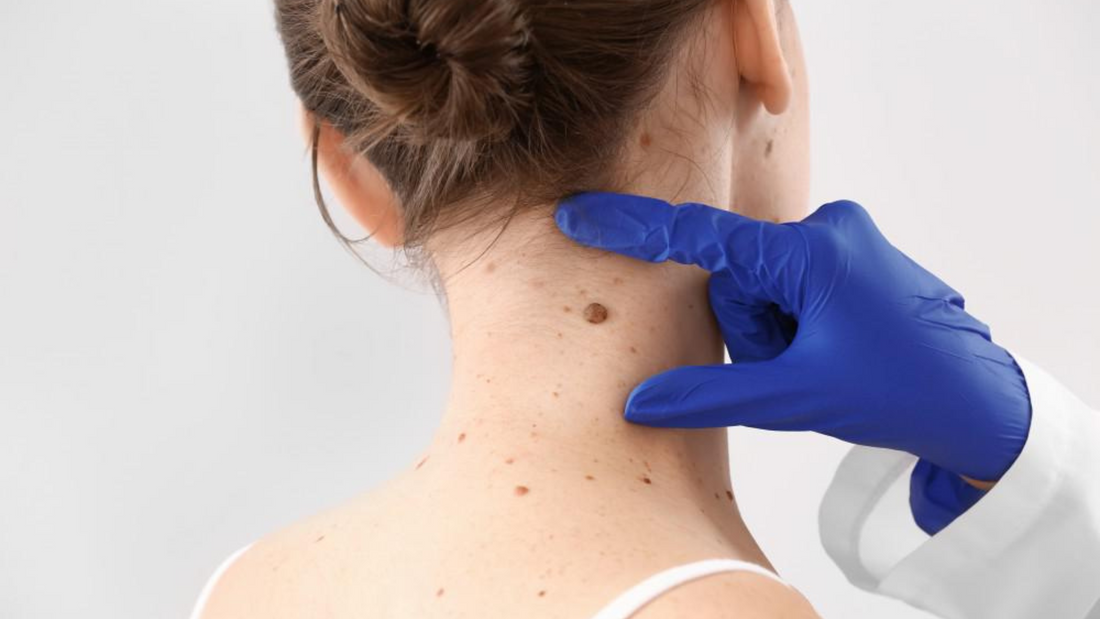
For the untrained eye, it's not easy distinguishing between harmless (also known as benign) moles and those which need further attention.

By regularly checking and getting to know your skin, you may notice moles that are changing and identify new moles. In a study involving 3,500 Queenslanders with melanoma, the study found that almost half were detected by patients themselves and around one fifth were found by partners.

In recent decades, the incidence of skin cancer has increased in Australia, the United States, Canada, the United Kingdom, and many other countries around the world.

Despite skin cancer being described as Australia's "national cancer" (2 in 3 Australians will be diagnosed with skin cancer by the time they are 70 years old), it is also described as being "the most preventable". It is never too late to start protecting your skin as skin damage is cumulative.

If you spend time outdoors, medical experts recommend UPF50+ sun protective clothing as the first line of defence against the sun's ultraviolet rays.

Solbari believes in prevention being the best cure, getting to know your skin and getting regular skin checks.

Do you know what to look out for when you check your skin?

The features of melanoma to look out for are often referred to as the ABCD rule:

Asymmetry
Half of the mole does not match the other half in size, shape or colour.

Border
The edges of moles are irregular, scalloped, or poorly defined.

Colour
The mole is not the same colour throughout.

Diameter
The mole is usually greater than 6 millimetres when diagnosed, but may also be smaller.

    The ABCD rule has been used by Doctors for more than 25 years to identify suspicious moles. But with the increasing diagnosis of nodular melanomas (about 20% of all cases of melanoma) and smaller melanomas which do not subscribe to the ABCD rule, the EFG rule has been added.

    Evolution and Elevation
    A mole or skin lesion that is different from the rest, or changes in size, shape, or colour.

    Firmness
    Benign moles are quite soft to touch, whereas melanoma lesions can be solid.

    Growth
    Benign moles often remain relatively the same size, whereas melanoma lesions can often grow rapidly.

      If you are concerned about moles with any of the features described above, consult your skin doctor or dermatologist.

      You can find out more about Solbari's certified UPF50+ sun protective range by clicking the links below:

      Women UPF 50+
      Men UPF 50+
      Sun Hats UPF 50+
      Accessories UPF50+
      SPF 50+ Sunscreen
      Skin Check App

      Back to blog homepage

      Content Disclaimer: All content on the Solbari website is for informational purposes only. It does not constitute and is not intended to be a substitute for professional medical advice, diagnosis or treatment. Never disregard professional medical advice or delay seeking it because of something you have read on this website. Reliance on any information provided on this website is solely at your own risk. Always seek the guidance of your doctor or other qualified health professional with any questions about your health or a medical condition.

      More articles

      Your Story Series: Amy

      Your Story Series: Amy

      Skin Cancer & Melanoma
      5 min read

      After multiple melanoma diagnoses, Amy has built her sun protection routine around her adventurous lifestyle. She incorporates both SPF sunscreens and UPF 50+ clothing into her every day life so she can continue to embrace the outdoors without sacrifice.

      Leah wears a Solbari visor and t-shirt

      Your Story Series: Leah

      Skin Cancer & Melanoma
      2 min read

      8 years ago, Leah was diagnosed with Stage 3 melanoma shortly after her son's first birthday. In the years since she has learned the tools to allow her to continue enjoying the outdoors.

      Courtney wears a Solbari sun hat and Luxe Sun Wrap

      Your Story Series: Courtney

      Skin Cancer & Melanoma
      3 min read

      After seeking help for a spot that was changing colour and getting bigger, Courtney was diagnosed with melanoma. She has since prioritised her health above everything else, and has incorporated sun protection as a non-negotiable in her daily routine. 

      How UPF 50+ Sun Protection Can Help Alleviate Rosacea

      How UPF 50+ Sun Protection Can Help Alleviate Rosacea

      Skin Cancer & Melanoma
      2 min read

      Does overexposure to UV rays affect Rosacea? How can UPF 50+ sun protective clothing help to alleviate this skin condition? Find out more.

      Courtney Mangan wears Solbari UPF 50+ products

      Your Story Series: Courtney Mangan

      Skin Cancer & Melanoma
      2 min read

      After four melanoma diagnoses, Courtney Mangan's journey to nearly five years cancer-free reflects extraordinary resilience and a renewed commitment to lifelong sun safety.

      A doctor conducts a skin check

      Year-Round Skin Health Tips

      Skin Health Education
      3 min read

      Maintain healthy skin all year round with daily sun protection, monthly self exams, and annual dermatologist skin checks. Learn how simple habits can reduce skin cancer risk, support early detection, and keep your skin protected for the long term.